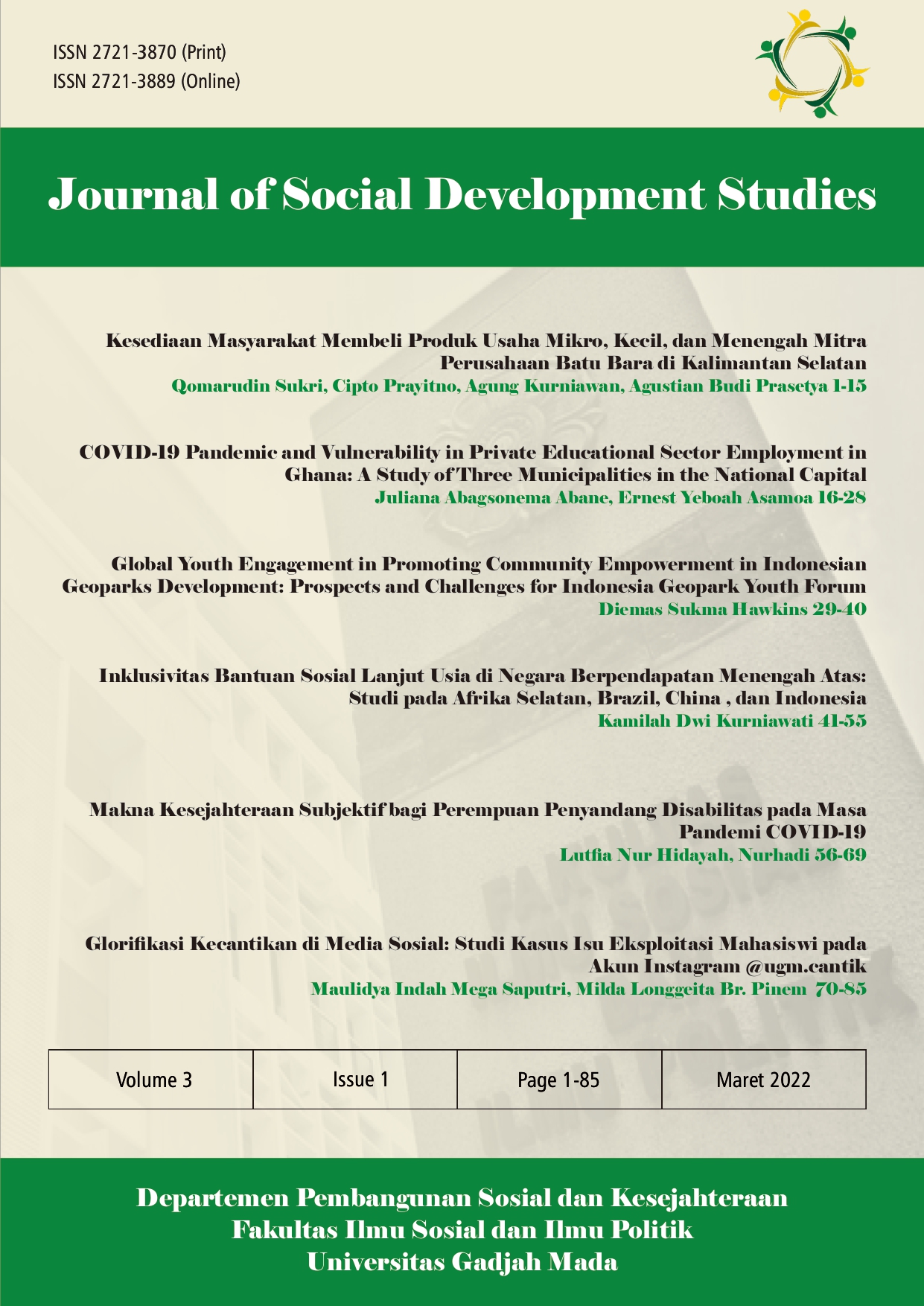
Archives
-
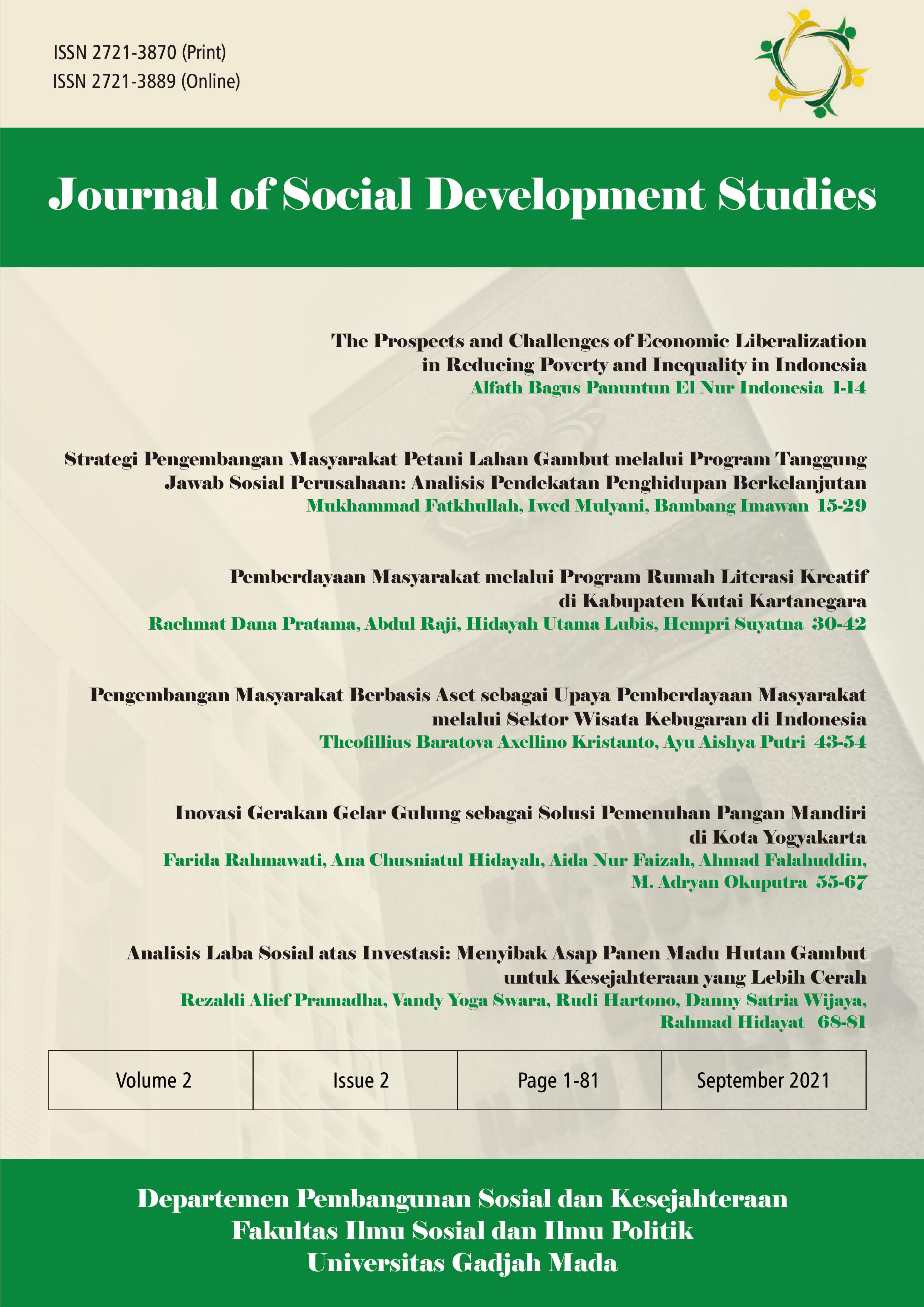 Asset and Innovation in Community Empowerment
Vol 2 No 2 (2021)
Asset and Innovation in Community Empowerment
Vol 2 No 2 (2021)In these times community empowerment has gone through significant development conceptually and practically. The changing paradigm from problem based to asset based denote as one of the significant development in community empowerment discourse. Not only that, community empowerment practices also influenced by growing numbers of social innovation which initiate by many development actors (e.g. state, corporation and civil society organization). Therefore, this edition will discuss community empowerment initiatives through asset based and innovation approach.
-
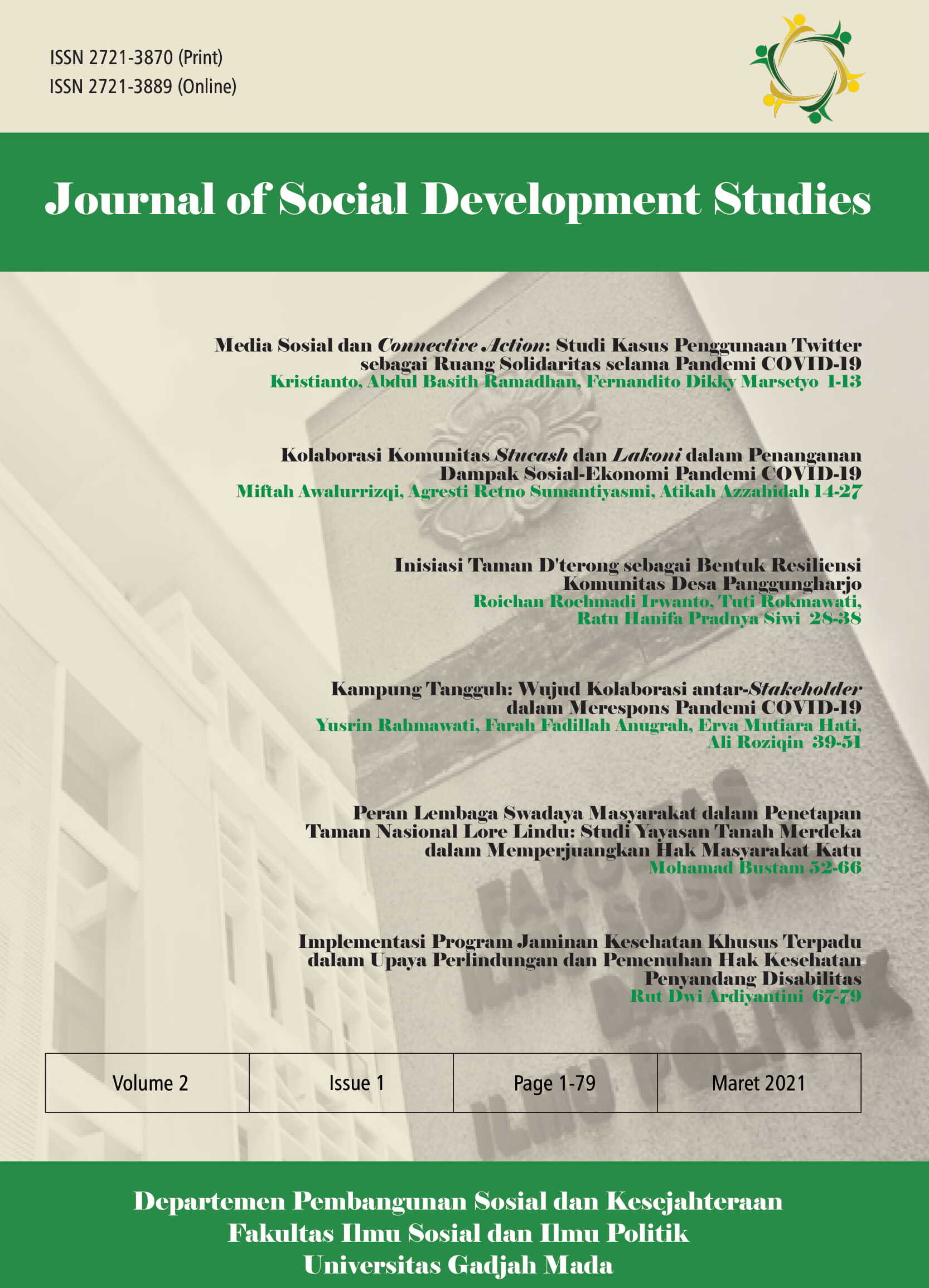 Connective Action, Solidarity and Pandemic
Vol 2 No 1 (2021)
Connective Action, Solidarity and Pandemic
Vol 2 No 1 (2021)Indonesia has been facing COVID-19 pandemic for more than a year. Along the way, various types of solidarity movements emerged to overcome the crisis faced by communities. This edition portrays the emergence of this solidarity space that is not limited to conventional solidarity actions, but there are new models that have also emerged. New public spaces such as social media stimulate the rise of solidarity movements based on connective action instead of collective action.
-
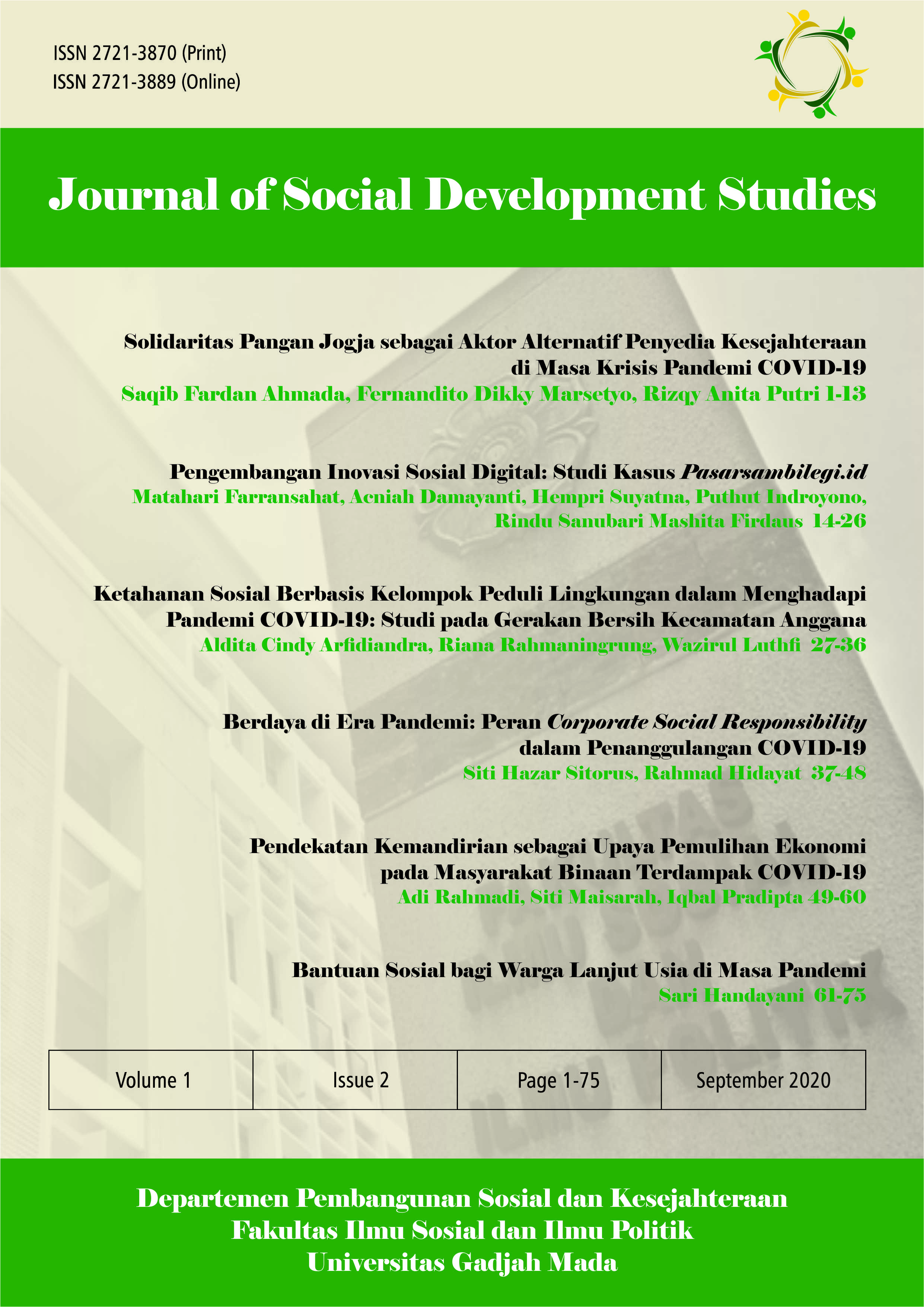 Social Development in the Time of Crisis
Vol 1 No 2 (2020)
Social Development in the Time of Crisis
Vol 1 No 2 (2020)The pandemic began to put pressure on the government in many countries, causing grave challenges to millions of lives. It brings the idea of the non-state initiatives back in a series of social development agenda. In response to the global impact of COVID-19 on the economy, communities, families, local institutions, and vulnerable groups, this edition presents research articles focusing on community empowerment and corporate-driven responses in reducing pandemic and its effects caused.
-
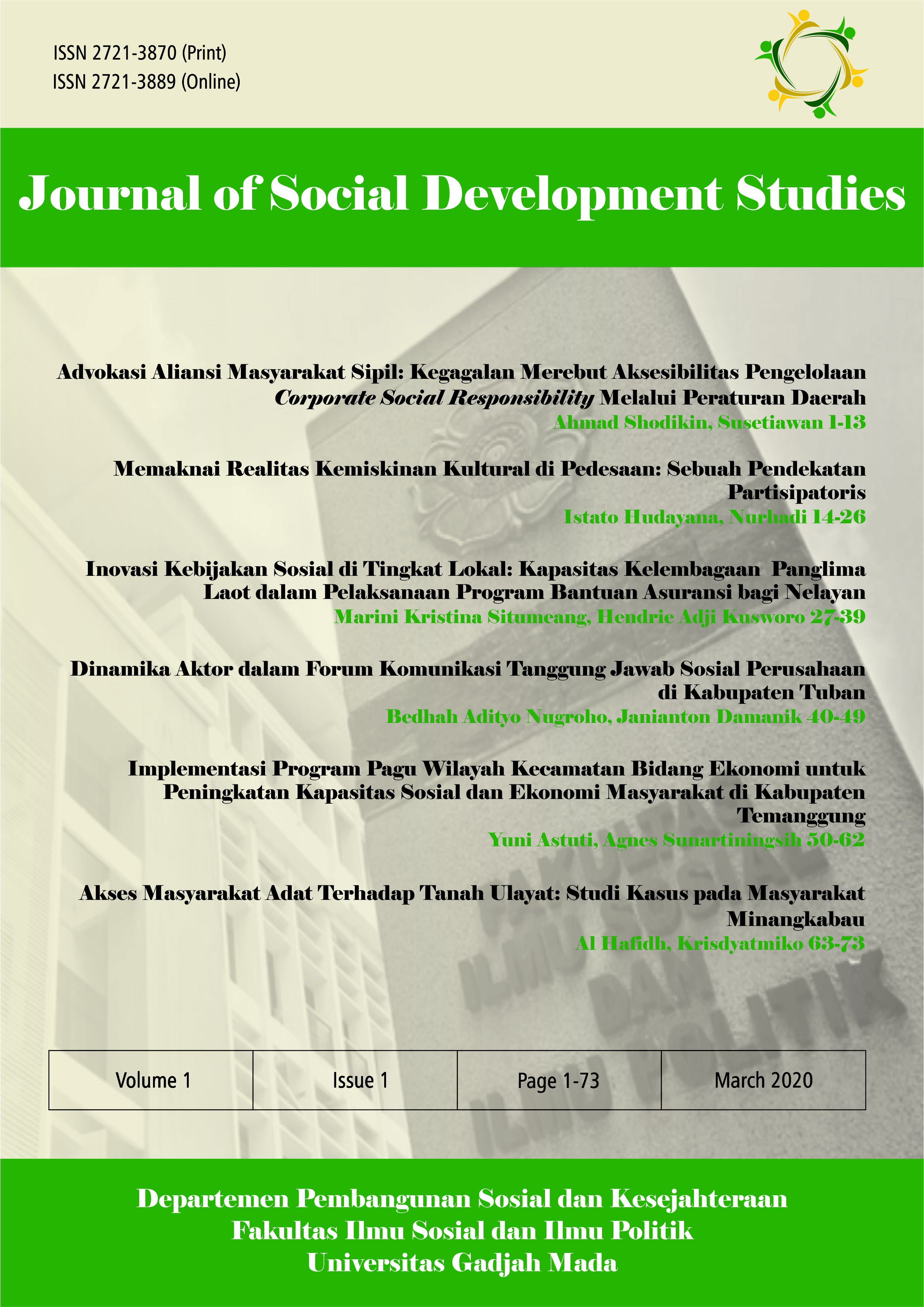 Social Development in Local Context
Vol 1 No 1 (2020)
Social Development in Local Context
Vol 1 No 1 (2020)Discussions of the roles of various actors in development studies highlight the significant roles of the state, corporation, and civil society. Focusing on development programs implemented through corporate social responsibility, community-based, and state-led development programs, this issue covers several programs in various local contexts in Indonesia. It highlights the dominant role of the state in shaping the process of social development, downgrading the significance of initiatives from both corporation and civil society.