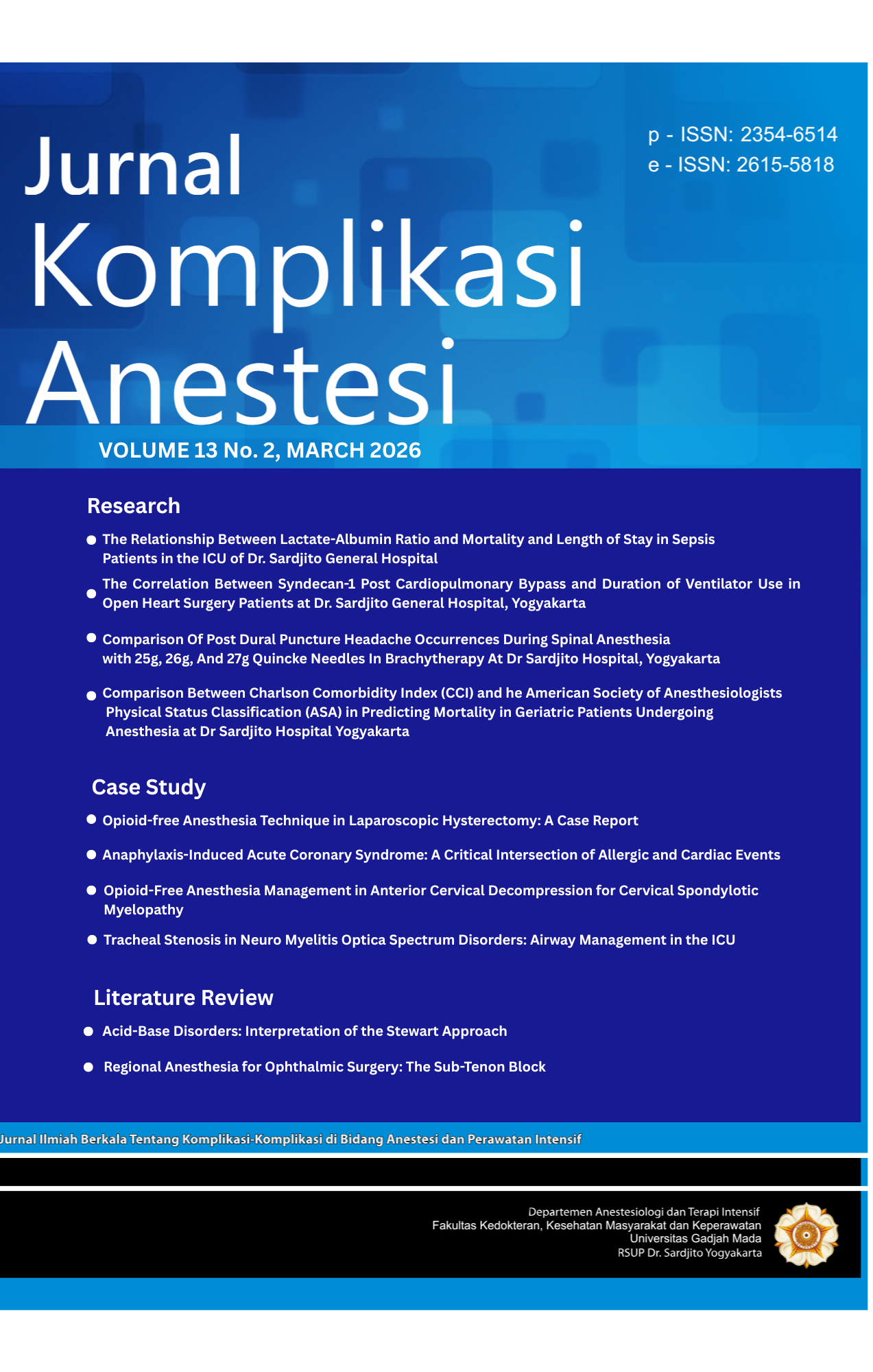
Opioid-free Anesthesia Technique in Laparoscopic Hysterectomy: A Case Report
DOI:
https://doi.org/10.22146/jka.v13i2.14681Keywords:
Opioid-free anesthesia, opioid, laparoscopic hysterectomy, postoperative pain, multimodal analgesiaAbstract
Background: The use of opioid-free anesthesia techniques is increasingly recognized in efforts to reduce the risk of opioid-related postoperative side effects.
Case: This case report describes the use of opioid-free anesthesia technique in laparoscopic hysterectomy in a 50-year-old woman with multiple myomas. The patient had a history of fentanyl allergy and was classified as ASA I. Anesthesia induction was performed with a combination of dexmedetomidine, ketamine, and rocuronium, maintained with sevoflurane, rocuronium, and lidocaine. The patient did not experience any complications during postoperative monitoring.
Discussion: This case highlights that an opioid-free anesthesia approach can be safely implemented in patients with opioid allergies. The combination of dexmedetomidine, ketamine, and lidocaine provides adequate analgesia and hemodynamic stability, supporting its role as an effective alternative to opioid-based anesthesia
Conclusion: This anesthesia technique demonstrates good pain control without the use of opioids and minimizes opioid-related side effects
References
Bohringer C, Astorga C, Liu H. The benefits of opioid free anesthesia and the precautions necessary when employing it. Transl Perioper Pain Med. 2020; 7(1): 152-7.
Shanthanna H, Ladha K, Kehlet H, Joshi G. A critical review of opioid-free versus opioid-sparing Approaches. In: Perioperative opioid administration. Anesthesiology. 2021; 134(4): 645-59. Doi: 10.1097/ALN.0000000000003572
Beloeil H, Garrot M, Lebuffe G, Gerbaud A, Bila J, Cuvillon P, et al. Balanced opioid- free anesthesia with dexmedetomidine versus balanced anesthesia with remifentanil for major or intermediate noncardiac surgery. Anesthesiology. 2021; 134(4): 541-51. Doi: 10.1097/ALN.0000000000003725
Goyal R, Singh M, Sharma J. Comparison of ketamine with fentanyl as co-induction in propofol anesthesia for short surgical procedures. Int J Crit Illn Inj Sci. 2012;2(1): 17-20. Doi: 10.4103/2229-5151.94890
Kaniyil S, Haley C. Opioid-free Anaesthesia. Anaesthesia Tutorial of The Week. In: Word Congress Anesthesiologist. 2021. Available from: https://resources.wfsahq.org/atotw/opiod-free-anaesthesia/
Toleska M, Dimitrovski A, Dimitrovska NT. Postoperative nausea and vomiting in opioid-free anesthesia versus opioid-based anesthesia in laparoscopic cholecystectomy. Pril (Makedon Akad Nauk Umet Odd Med Nauki). 2022;43(3): 101-108. Doi: 10.2478/prilozi-2022-0042
Downloads
Published
How to Cite
Issue
Section
License
The Contributor and the company/institution agree that all copies of the Final Published
Version or any part thereof distributed or posted by them in print or electronic format as permitted herein will include the notice of copyright as stipulated in the Journal and a full citation to the Journal.